
A feature folded into the meeting client itself
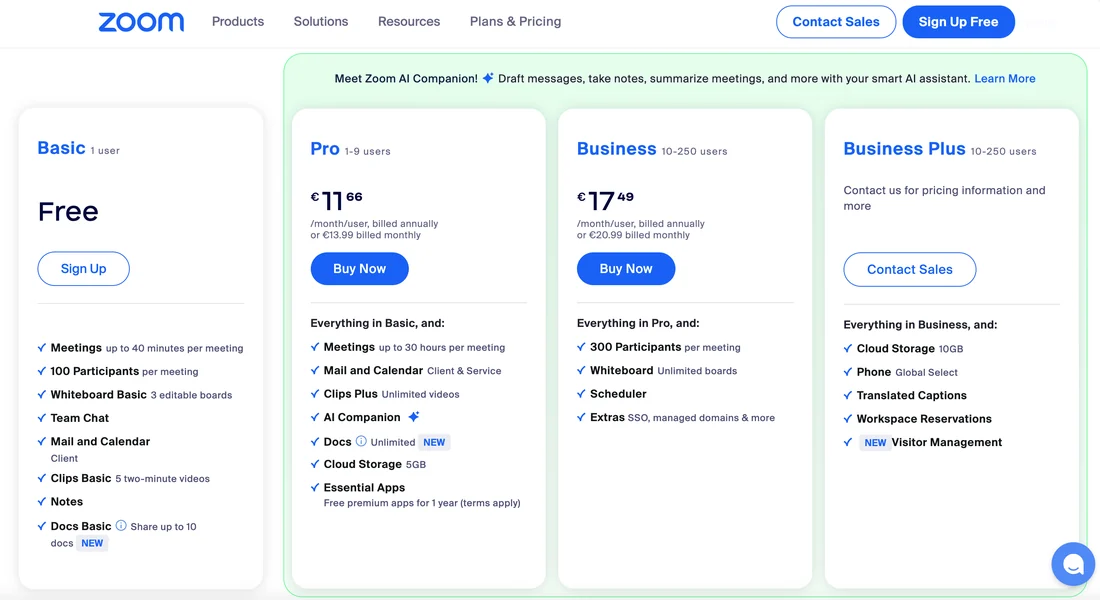
Zoom's own guidance, in a page titled “How to make the most of AI in Zoom Workplace” that states it was first published on 25 September 2023, describes AI Companion as a set of generative features living inside the existing Zoom Workplace app rather than a separate product: summarising a meeting that already happened, drafting an email or chat message in a chosen tone, and taking notes enhanced by the meeting transcript. The page states these features are “included with eligible paid Zoom Workplace plans,” meaning access is a function of which subscription an organisation already holds rather than a separate purchase, at least for the core features described there.
What triggers a summary, and what it uses
Zoom's support article on getting started with Zoom AI features states that a host can enable meeting summary, and that the resulting summary and next steps can be shared by email or in Zoom Chat after the meeting ends. It also states that Zoom does not use a customer's audio, video, chat or shared content to train Zoom's own or third-party AI models, while noting that this data can still be processed by third-party AI providers, in some cases in US data centres, when the feature is actually used. What neither page states clearly is whether every participant in a meeting is notified, beyond the host's control panel, that a summary is being generated from what they say.
A summary is a draft, not a transcript
Both Zoom documents describe a generated output rather than a verified record: the summary is built from a transcript by a language model, and nothing in either page claims the output is checked for accuracy before it is shared. That distinction matters most exactly when a summary is used for something consequential, a decision record or a performance note, since an incorrect line in a shared meeting summary can travel further and look more authoritative than an incorrect line in someone's private notes.
Questions to ask before you adopt it
- Are meeting participants told, beyond the host, when AI Companion is generating a summary of what they say?
- Does your plan's summary feature route content to a third-party AI provider, and where is that stated?
- Who checks a shared summary against the actual recording before it becomes the record people rely on?
Bundling a feature into an existing subscription lowers the cost of trying it, and that is precisely why the consent and accuracy questions matter more, not less: a feature nobody had to separately request is a feature people can end up depending on without ever deciding to.
Sources & reading trail
States AI Companion features are included with eligible paid Zoom Workplace plans and describes summary, compose and note-taking features; the page states it was first published 25 September 2023 and later edited.
Source published: 25 September 2023 · Retrieved: 16 September 2026
Describes what triggers a meeting summary, how it is shared, and states customer content is not used to train Zoom's or third-party AI models except when processed by third-party providers during use.
Source published: Not established · Retrieved: 16 September 2026
Announcements and papers establish the record; the friction reading and the adoption questions are Productivity Atlas editorial analysis. This retrospective draft does not imply the site published on the event date.