
What was announced, and what the app does
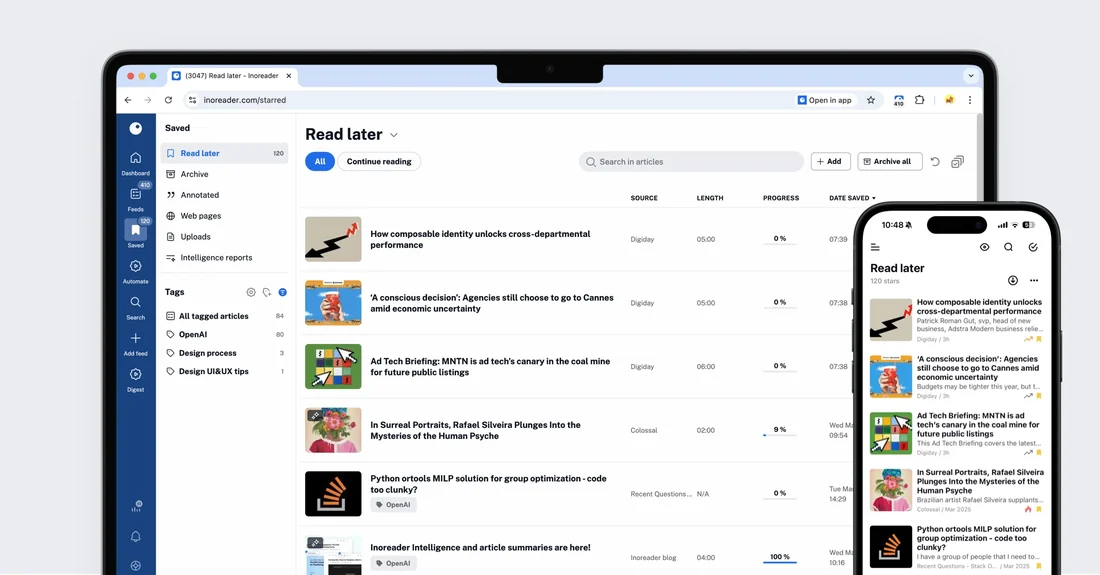
Readwise announced the public beta of Reader, its dedicated read-later app, on 14 December 2022, describing it as their own reading app built to sit alongside the original Readwise highlight-syncing service. Reader's own product page now describes it as consolidating several separate habits into one place: articles saved from the web, PDFs, email newsletters, RSS feeds, YouTube video transcripts, and social posts, with text-to-speech offered across formats. The core action a user takes inside Reader is highlighting, the same action that in a paper book or a browser tab would normally leave no lasting trace once the source is closed.
How the pipeline is meant to keep highlights yours
What distinguishes Reader from a plain read-later bookmarking tool is what happens after a highlight is made. According to Readwise's product page, highlights sync back to the original Readwise service and can then export automatically into note-taking tools including Obsidian, Notion, Roam Research, Evernote and Logseq, rather than staying locked inside the reading app itself. Readwise's documentation also describes importing existing saved articles from Pocket and Instapaper, so a switch to Reader does not necessarily mean abandoning years of previously saved reading. A public API is offered for anyone who wants a custom connection the built-in exports do not cover.
What keeping a pipeline yours actually requires
The promise of portability depends on continued, working export integrations, which is a maintenance commitment as much as a feature; an export destination that changes its own interface can quietly break a highlight pipeline a user has come to depend on. It also depends on habit: highlighting is only useful if a reader later revisits or acts on what was marked, and Reader's own breadth, articles, PDFs, video, social posts, all in one inbox, can as easily produce an unread backlog as a curated set of notes. The public beta announcement describes what the company built; it does not measure whether typical users actually complete the loop from highlight to note to later use, a gap between a documented feature and an evidenced outcome that is worth keeping in mind.
Questions to ask before you adopt it
- Which note-taking tool do your highlights need to reach, and is that specific export still actively maintained?
- Will you actually revisit highlights later, or does the app mainly relocate an unread backlog rather than remove it?
- If you stopped paying for the service, could you export your existing highlights and saved articles in a usable form?
Reader's documented design treats a highlight as a durable object meant to leave the app, not a feature meant to keep a user inside it. That is a meaningfully different promise from most reading apps, and it is one that can be checked directly against the export options a user actually has, rather than taken on trust.
Sources & reading trail
Dates the public beta launch of Readwise Reader and describes its aim as a single, fully-integrated reading app.
Source published: 14 December 2022 · Retrieved: 16 September 2026
Describes the current supported content sources and note-taking export destinations.
Source published: Not established · Retrieved: 16 September 2026
Confirms import support from Pocket and Instapaper into Reader.
Source published: Not established · Retrieved: 16 September 2026
Announcements and papers establish the record; the friction reading and the adoption questions are Productivity Atlas editorial analysis. This retrospective draft does not imply the site published on the event date.