
What launched, and when
Raycast's own blog archive dates its public beta and seed funding round to 29 October 2020, describing the release as a Hello World announcement alongside a developer program. The product is a keyboard-driven launcher for macOS, described on Raycast's website as a collection of powerful productivity tools all within an extendable launcher, positioned against the operating system's own built-in search. Where a system launcher opens applications and files, Raycast's stated model is to let a typed command reach into other services directly, so a user can, in the company's words, use their favourite tools without even opening them.
How the extension store extends the launcher
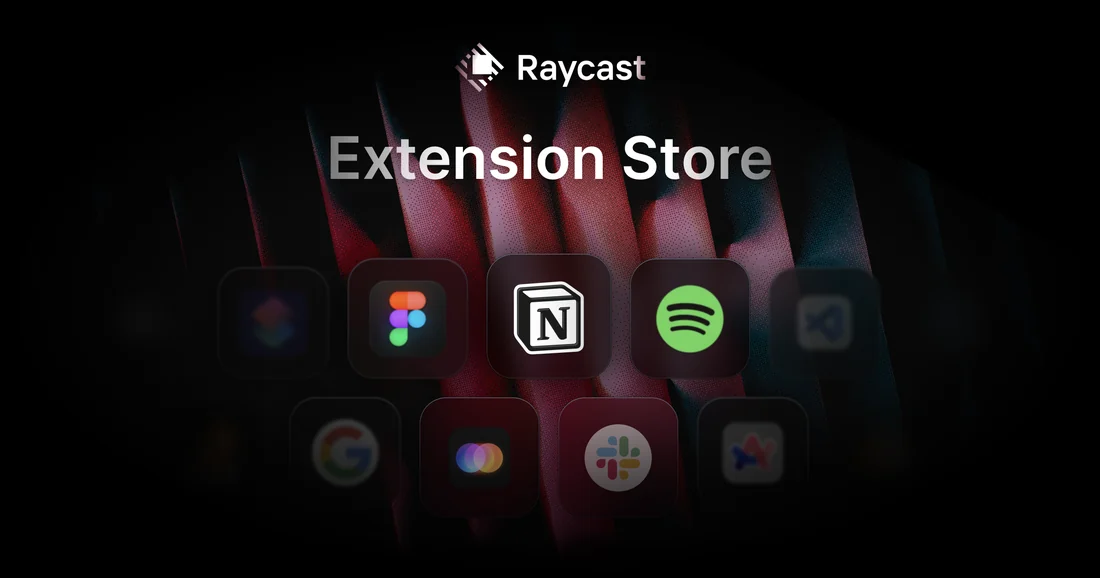
The productivity layer here is not the launcher itself but its store of community-built extensions, covering tools from Linear and Slack to Spotify and Notion. Raycast's developer docs describe extensions as built with TypeScript, React, and Node, letting a developer start with a simple script, add a static UI or use React to go wild, and publish the result for all users. That openness is also the store's central risk: an extension is code written by a third party, running inside a tool that can see a user's clipboard, files and other application data, which is why the review process matters as much as the launcher's own speed.
What the review and privacy rules actually restrict
Raycast's own submission guidelines state that extensions requesting Keychain access will be rejected due to security concerns, and separately prohibit external analytics integration and binaries from untraceable sources. Its privacy policy describes a local-first architecture in which data may remain stored locally on a device unless a user chooses features that require cloud processing or synchronisation, and states plainly that the company does not sell personal data. Together these are a documented, testable set of constraints, not a marketing claim about privacy in the abstract, though as with any store-review process, users depend on Raycast enforcing its own stated rules consistently rather than on the rules alone.
Questions to ask before you adopt it
- Which of the extensions you would install request access to sensitive data, and does the store's review actually screen for that?
- Does a keyboard-first tool suit how you already work, or does it require relearning habits built around a mouse?
- If an extension you depend on is removed from the store, what workflow breaks, and how easily can you replace it?
A launcher's value is mostly invisible until the moment a shortcut saves a search; an extension store's value is only as good as the review process behind it. Raycast's documentation is unusually specific about both, which makes it possible to check the claims rather than simply trust them.
Sources & reading trail
Dates the public beta and seed round to 29 October 2020, the launcher's original public availability.
Source published: 29 October 2020 · Retrieved: 16 September 2026
Describes the launcher's core positioning and extension marketplace.
Source published: Not established · Retrieved: 16 September 2026
States the local-first data architecture and the commitment not to sell personal data.
Source published: Not established · Retrieved: 16 September 2026
Documents the store's security-review rules, including the rejection of Keychain-access requests.
Source published: Not established · Retrieved: 16 September 2026
Announcements and papers establish the record; the friction reading and the adoption questions are Productivity Atlas editorial analysis. This retrospective draft does not imply the site published on the event date.