
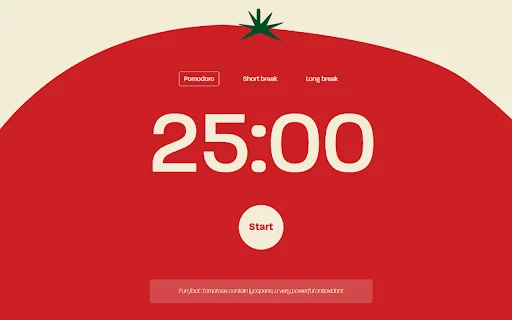
A fixed unit of work, not just a countdown
Francesco Cirillo's own account, published on the technique's official site, says he 'created the Pomodoro® Technique back in the late 1980s' as a university student experimenting with a kitchen timer, and that the practice has been 'refined over 30+ years' since. The method's own description, as retrieved on 16 September 2026, is explicit that the timer is a small part of a larger system: 'A complete productivity system — not just a timer,' built around 'daily planning, interruption management, and effort estimation.' The self-paced course page states this even more directly: 'Setting a timer for 25 minutes is not the Pomodoro® Technique. It's a small piece of it.'
Estimating, working, recording
The full method, as Cirillo describes his own book's structure, moves through six objectives: finding out how much effort a task actually takes, cutting down on interruptions, estimating effort in advance, making each interval more effective, building a timetable, and defining a personal improvement target. In practice this means a worker chooses one task, estimates it in whole pomodoros before starting, works a fixed 25-minute interval without switching tasks, then logs the result on a records sheet. The estimating and recording steps are what let someone see, over weeks, whether their planning is improving — a claim the site makes about itself rather than a result an outside study has measured.
What the interval is protecting against
No study in this draft tested the 25-minute duration itself, but a controlled experiment on interruption gives a reason the interval might matter. Mark, Gudith and Klocke's 2008 study interrupted 48 subjects performing an email task roughly every two minutes by phone or instant message, compared with an uninterrupted baseline. Interrupted subjects finished no slower — they completed the task faster, with no drop in accuracy — but they reported significantly higher stress, frustration, time pressure and effort than the baseline group. The lesson is narrower than 'interruptions cost time': the measured cost was subjective strain, not the clock. A timer that blocks notifications removes the trigger for that strain during the interval; it does nothing about the estimation and review habits the method treats as the actual system, and many timer apps drop those entirely, keeping only the countdown.
- Does the app support estimating a task in pomodoros before starting, or only counting down?
- Is there a records view that shows whether estimates are improving over time?
- What happens to interruptions that arrive during the interval, and are they logged or just suppressed?
Cirillo's own framing treats the timer as the least interesting part of his method. Software that keeps the countdown but drops the planning and the record-keeping has kept the part he says matters least.
Sources & reading trail
States the method is 'a complete productivity system — not just a timer' built on planning, interruption management and effort estimation.
Source published: Not established · Retrieved: 16 September 2026
Francesco Cirillo's own account of creating the technique in the late 1980s, the 25-minute interval, and the book's six objectives.
Source published: Not established · Retrieved: 16 September 2026
States that a 25-minute timer 'is not the Pomodoro Technique. It's a small piece of it' and describes the estimation and record-keeping modules.
Source published: Not established · Retrieved: 16 September 2026
Experiment on 48 subjects found interrupted work was completed faster with no accuracy loss but significantly higher stress, frustration, time pressure and effort.
Source published: Not established · Retrieved: 16 September 2026
Announcements and papers establish the record; the friction reading and the adoption questions are Productivity Atlas editorial analysis. This retrospective draft does not imply the site published on the event date.