
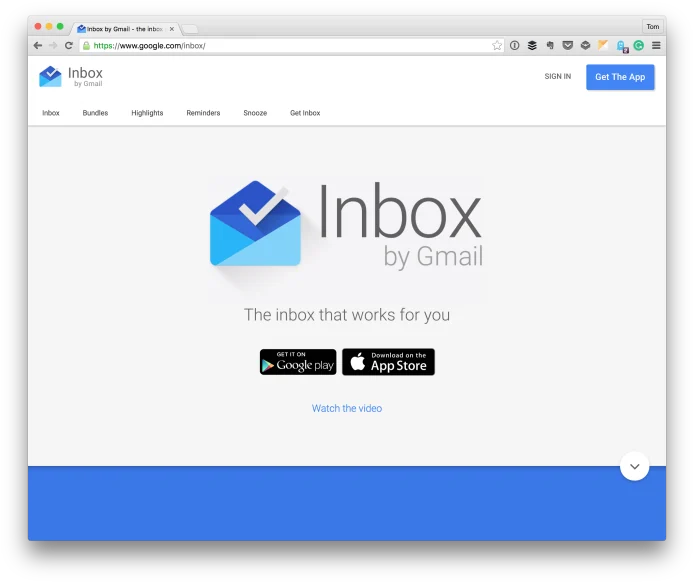
An experiment retired into its parent product
On 12 September 2018, Google announced that Inbox by Gmail would close at the end of March 2019, about four years after it launched. The post, written by a Gmail product manager, framed this as a graduation rather than a failure: Inbox had been a place to try ideas like snoozing email, Smart Reply and Nudges, and Google said it had “taken popular Inbox experiences and added them into Gmail.” A companion notice on the Google Workspace Updates blog, aimed at business administrators, confirmed the same date and added that admins could disable Inbox access from the Admin console ahead of the deadline.
What “merged” meant in practice
The announcement is explicit that certain named features moved to Gmail: snoozing, Smart Reply and priority notifications among them. It does not claim that Inbox itself, as an interface, moved anywhere. Inbox's bundling and its swipe-based triage were a distinct way of organising a mailbox, not just a set of buttons, and that design did not survive the transition. Reading “your favourite features are moving to Gmail” as a promise that the workflow would feel the same was relying on an inference the post never actually made. The Workspace Updates post is the more useful document for anyone managing accounts rather than using one personally: it treats the closure as an administrative event with its own console setting, separate from the consumer framing on the main blog.
The gap between a feature list and a habit
Six months is a reasonable runway for an email client, and nothing in either post suggests data was at risk: mail lives in the account, not in the client reading it. The real cost fell on people whose daily routine was built around Inbox's bundling and snooze-first design rather than around any single feature. Neither post measures how many users adjusted easily against how many left Google's mail products altogether, so the “graduation” framing should be read as the company's chosen account of its own product decision, not as a finding.
- When a vendor says a feature is “moving” elsewhere, is the underlying workflow moving with it, or only the feature name?
- Is there an administrator-facing notice as well as a consumer one, and do the two name the same date?
- What in your current routine depends on an interface choice rather than on a feature available in any client?
Inbox is a useful case precisely because nothing was lost in the way Reader's shutdown lost an API: the mail persisted, the company survived, and the “merge” still changed how many people worked each day. A retirement can be gentle on data and still be disruptive on habit.
Sources & reading trail
Announces Inbox by Gmail's closure at the end of March 2019 and names the Inbox features carried into Gmail.
Source published: 12 September 2018 · Retrieved: 16 September 2026
Confirms the same closure date for Workspace administrators and describes disabling Inbox access via the Admin console.
Source published: 12 September 2018 · Retrieved: 16 September 2026
Announcements and papers establish the record; the friction reading and the adoption questions are Productivity Atlas editorial analysis. This retrospective draft does not imply the site published on the event date.