
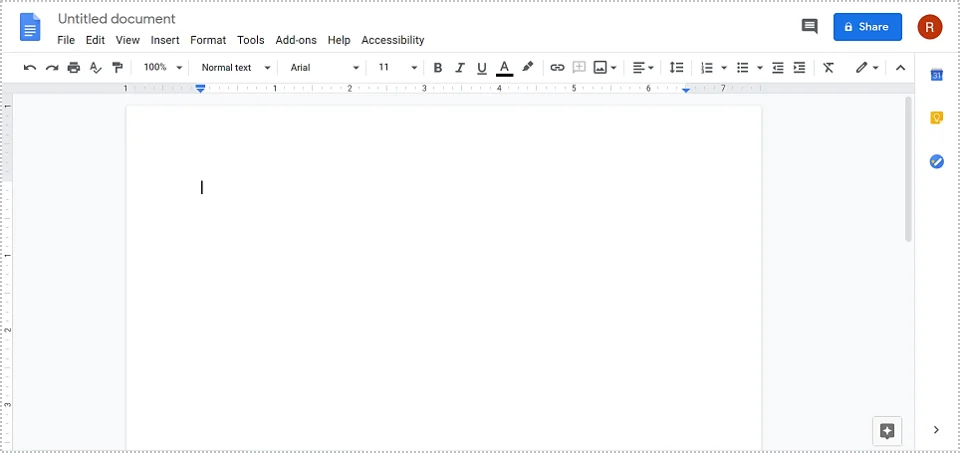
A word processor moves into a browser
In a company blog post dated 9 March 2006, a member of what the post calls the Writely Team wrote that after Google's acquisition of the startup Upstartle, 'the Writely team, are now part of Google'. Writely was a word processor that ran inside a web browser rather than as installed software, and the same post records that it had drawn 'many thousands' of registered users through word of mouth since its beta launched in August 2005. The acquisition post is candid about a cost of the transition: existing users could keep working, but Google was 'not accepting new registrations until we've moved Writely to Google's software architecture', a pause the post frames as protecting the product rather than abandoning it.
What launched on 11 October 2006
Seven months later, a Google press release announced Google Docs & Spreadsheets, describing it as a service that 'integrates Writely and Google Spreadsheets into a single, easy-to-use product'. The release states the point plainly: people can 'easily collaborate with others, online and in real time', share a document 'as view-only', or 'publish them to a blog or as an HTML page'. That bundles three separate things into one launch: a word processor and a spreadsheet combined into one account, live co-editing inside that account, and a publishing path that did not require a separate blog or web host. Judged only by this document, the announcement is a vendor's own description of what shipped, not a measurement of how real-time editing performed under load or across slow connections.
What changed about versions and ownership
The workflow this replaced was an attachment mailed back and forth, edited in isolation, and reconciled by hand into a single 'final' copy. A document that lives at one URL, edited by more than one person as it happens, removes that reconciliation step but introduces a different one: who owns the canonical copy, and what happens to access when an account is deleted, downgraded, or the underlying company changes the product again. Google's current product page for Docs markets exactly this ownership question as solved, promising that stakeholders 'can reference previous versions of a document at any time and reinstate them'. That is a description of the product as retrieved on 16 September 2026, not a feature confirmed present at the 2006 launch; the 2006 sources say nothing about a full revision history.
- If an account or subscription lapses, who can still read or export the document?
- Does the tool preserve enough version history to recover from an unwanted overwrite by a collaborator?
- Was this product built independently, or acquired, and what happened to its previous users during that transition?
The Writely acquisition is a useful reminder alongside the launch: a tool with thousands of users can still be paused mid-registration by whoever buys it. Real-time collaboration solved a genuine coordination problem, but it also moved the document's home from a person's hard drive to a company's infrastructure, a trade that is easy to forget once the sharing itself feels routine.
Sources & reading trail
Records the Writely acquisition, its prior user base and the registration pause during integration.
Source published: 9 March 2006 · Retrieved: 16 September 2026
States the 11 October 2006 launch, the merger of Writely and Spreadsheets, and the collaboration and sharing features.
Source published: 11 October 2006 · Retrieved: 16 September 2026
Living page used only to contrast today's version-history claim with the undocumented 2006 feature set.
Source published: Not established · Retrieved: 16 September 2026
Announcements and papers establish the record; the friction reading and the adoption questions are Productivity Atlas editorial analysis. This retrospective draft does not imply the site published on the event date.