
A beta that got a firm end date
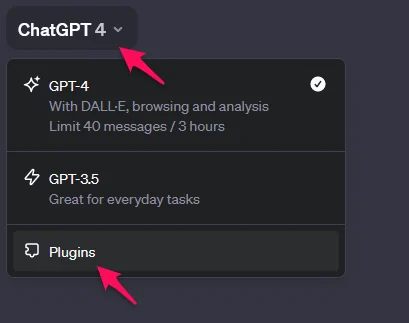
ChatGPT plugins let the chatbot call outside services mid-conversation, and they launched as a beta that most builders treated as an early, evolving feature rather than a finished platform. OpenAI's announcement introducing GPTs presented the newer, no-code alternative as a direct continuation of that beta, stating that “the design of actions builds upon insights from our plugins beta” and that a developer could reuse an “existing plugin manifest” to define actions for a GPT. Neither this announcement page nor OpenAI's help centre shows a visible publication date for the plugins wind-down itself; it is treated here as a living company document, retrieved as it stands on 16 September 2026.
What the retirement actually required of builders
The clearest documented dates come indirectly, through a company that had built on top of plugins rather than through OpenAI's own dated press material. Zapier's own support article, Sunsetting the Zapier ChatGPT plugin, records that new conversations using its plugin were disabled from 19 March 2024 and that existing conversations stopped working entirely on 9 April 2024, a timeline it attributes to OpenAI's own wind-down schedule. That gives the plugin beta a working life of roughly a year: enough time for third-party builders like Zapier to integrate, but not long enough to be treated as a stable foundation, and Zapier's own recommendation is telling: it pointed users toward a newer connection method rather than toward continued plugin support.
What to record before adopting the next platform feature
A one-year beta is not necessarily a failure; OpenAI frames the change as a graduation from an experiment to a more capable model, GPTs, that reused the plugin manifest format rather than discarding it outright. But builders who treated the plugins beta as a stable integration point, rather than as a beta, absorbed a migration cost that the “beta” label had already flagged as a risk. The lesson generalises beyond OpenAI: any platform feature still labelled experimental can be retired with only the vendor's own migration guide as the plan, and third parties who built on it, like Zapier here, end up publishing their own user-facing notices to manage the fallout.
- Is the feature you are building on still labelled beta, preview or experimental by its own vendor?
- If it were retired next quarter, whose documentation would you follow to migrate, the platform's or a downstream integrator's?
- Does the migration path reuse your existing configuration, such as a manifest, or does it require rebuilding from nothing?
Plugins were replaced quickly enough that many casual ChatGPT users never noticed the transition, but for the builders who depended on the beta, its one-year lifespan is the more durable lesson than any specific feature it offered.
Sources & reading trail
OpenAI's own announcement describing GPTs as the successor to the plugins beta and the manifest-based migration path.
Source published: Not established · Retrieved: 16 September 2026
Third-party help article documenting the exact 19 March and 9 April 2024 dates from OpenAI's plugin wind-down schedule and Zapier's recommended migration.
Source published: Not established · Retrieved: 16 September 2026
Announcements and papers establish the record; the friction reading and the adoption questions are Productivity Atlas editorial analysis. This retrospective draft does not imply the site published on the event date.